KasKade Engine

A modular 3D engine built with Rust and Direct3D 12. RTX Path Tracing with dynamic objects, DLSS RR and FSR RR.

Angry Neighbor in KasKade Engine. RTX PT + DLSS RR.
Core
Rust
Objects, components and game execution.
Rendering
Direct3D 12
Raster rendering and RTX Path Tracing.
Scripting
C# and Zito
Game components and user interfaces.
Platform
Windows
Editor and standalone application.

About the engine

KasKade is a Rust 3D engine for Windows. The project includes a scene editor, a game runtime and packaging tools.

Scenes and objects
Scenes contain objects and components. Components define model rendering, physics bodies, audio and object behaviour.
Asset import
Supported assets include glTF/GLB and FBX models, PNG textures, materials and skinned models. Imported data is cached on disk.
Game builds
Packaging tools produce a folder with an executable and project assets. The application runs independently of the editor.

Rendering

The main renderer uses Direct3D 12. Direct3D 11 and Vulkan implementations are also available for raster rendering.

Lighting and shadows
The raster renderer supports RTXGI DDGI global illumination, cascaded shadows and contact shadows.
Image processing
HDR, bloom, temporal anti-aliasing and tone mapping are available. Settings depend on the selected rendering mode.

RealTime Path Tracing

NVIDIA RTX Path Tracing is integrated into Direct3D 12. It renders lighting, reflections and shadows in dynamic scenes.

Dynamic objects
Object movement and skeletal animation are supported. Scene changes are sent to the renderer at runtime.
Image reconstruction
DLSS Ray Reconstruction and FSR Ray Regeneration are available. The usable mode depends on the GPU and installed runtime components.
Environment
Volumetric fog, local fog volumes and a procedural sky with time-of-day controls are included.
Interior: lighting and indirect illumination on brick surfaces. RTX PT + DLSS RR.
Evening scene: warm lighting and the environment. RTX PT + DLSS RR.
Exterior: lighting across the house and vegetation. RTX PT + DLSS RR.
Daylight: the facade, sky, and tree canopies. RTX PT + DLSS RR.

ZitoLang

Zito is an embedded scripting language with a compiler and virtual machine. Scripts attach to objects as components.

Game logic
The API provides access to objects, input, physics, audio, navigation and UI. The Angry Neighbor demonstration project uses Zito for its game logic.
Menus and settings
The UI system draws text, images and controls. The demonstration project uses it for the main menu, pause screen and graphics, audio and input settings. Settings persist between sessions.

Editor and tools

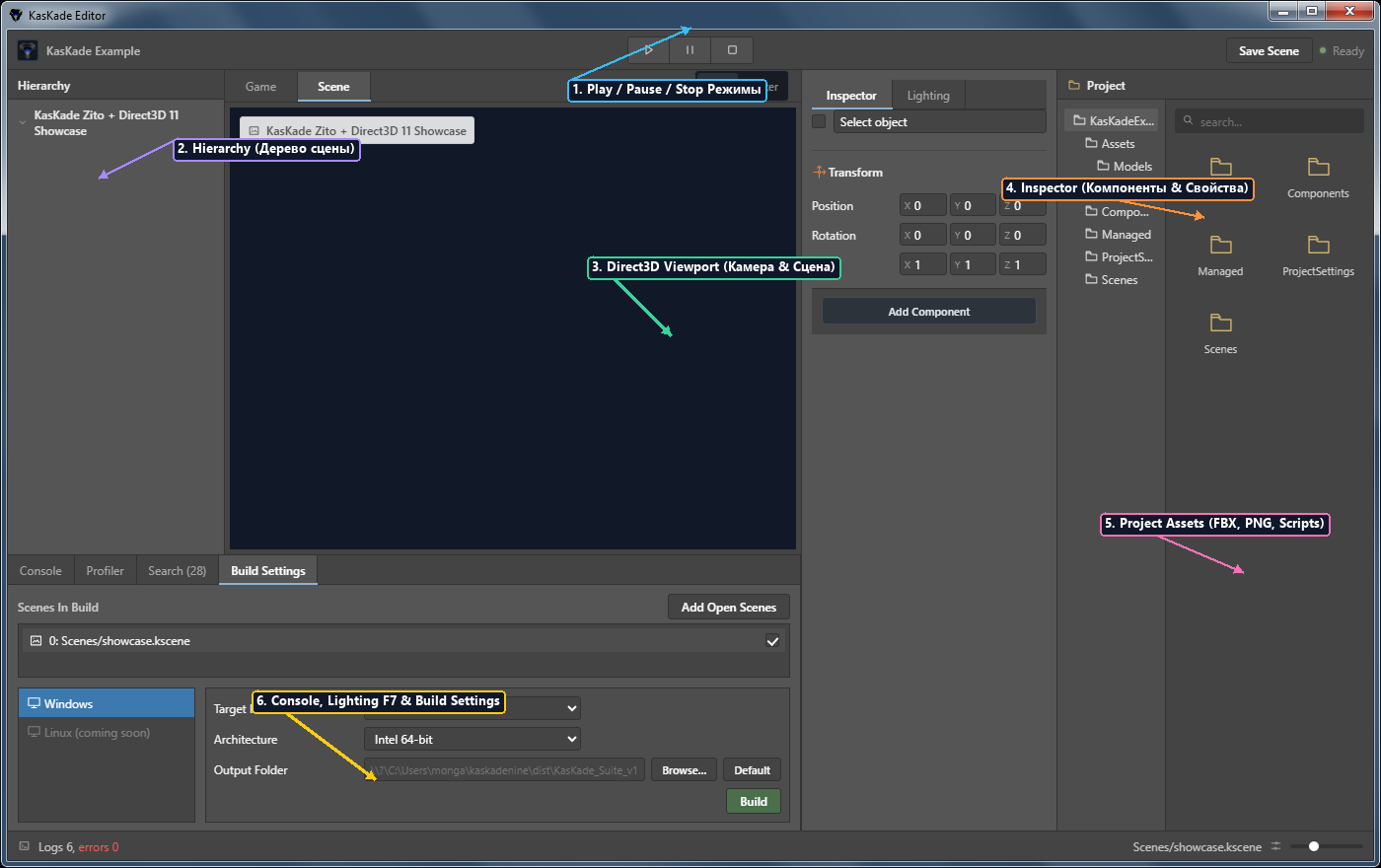
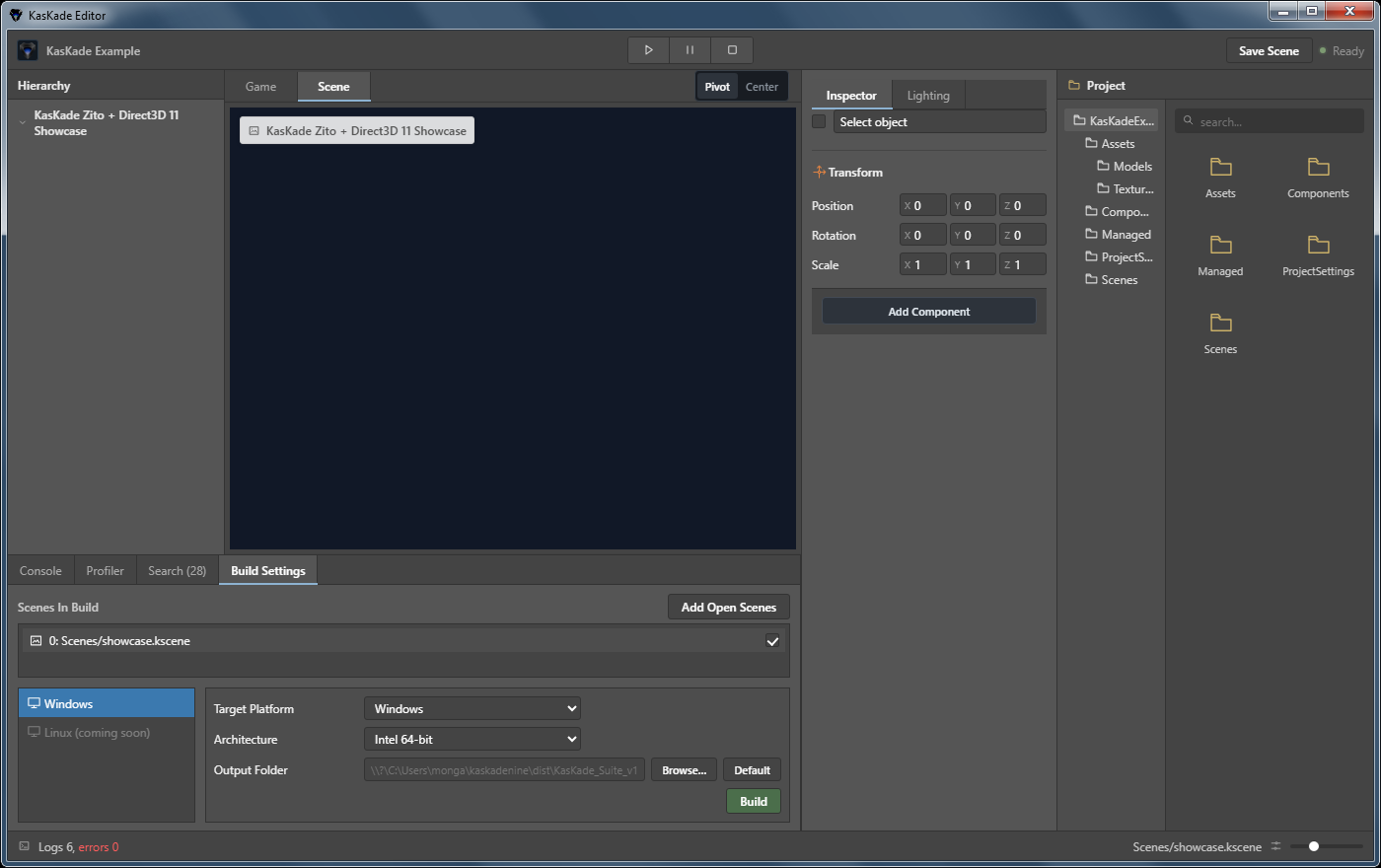
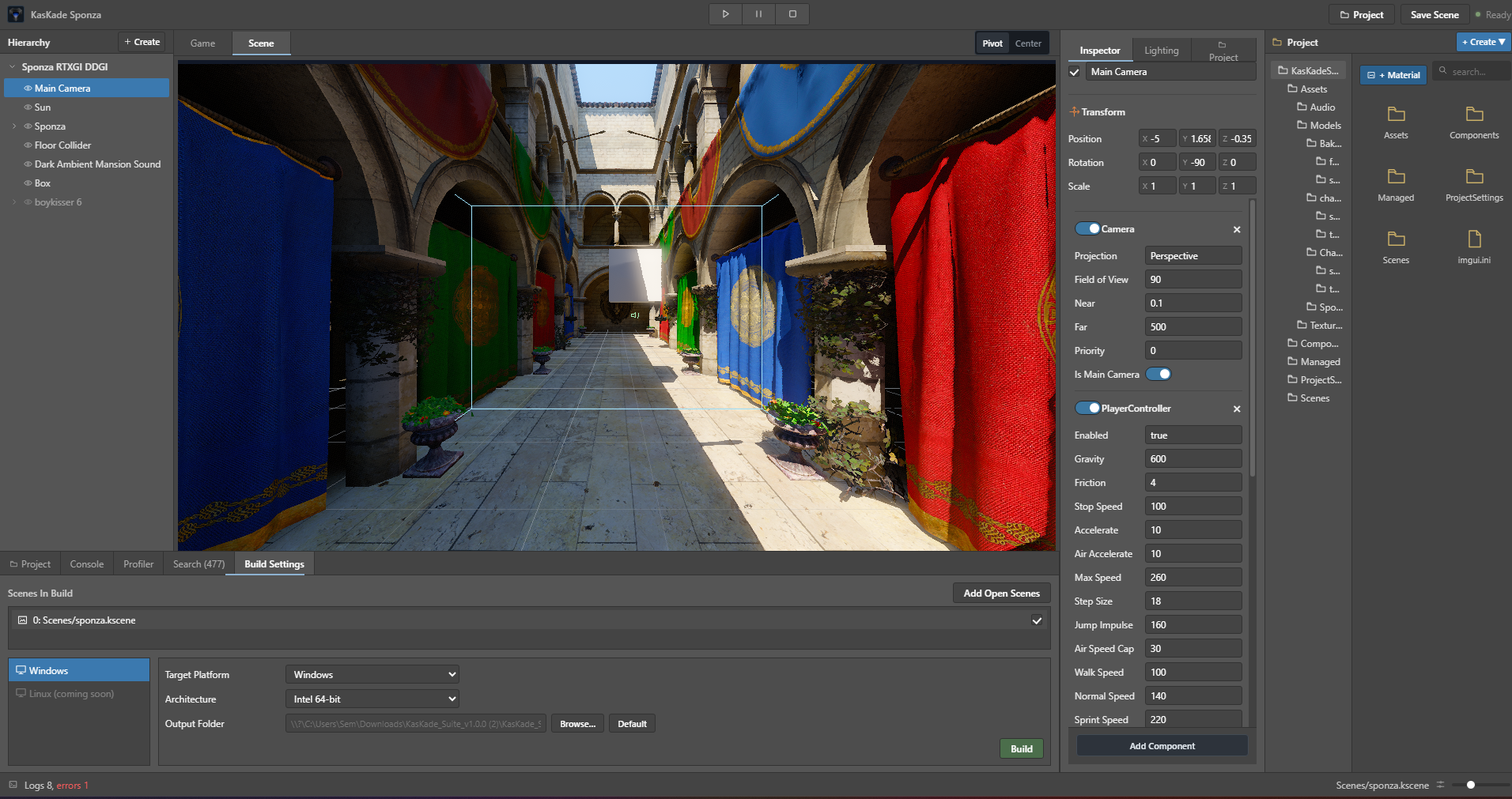
The editor includes a scene view, an object hierarchy and a component inspector.
Project workflow
Objects are placed in the scene and their properties are edited in the inspector. Models, scenes and scripts are stored in the project folder.
Profiling
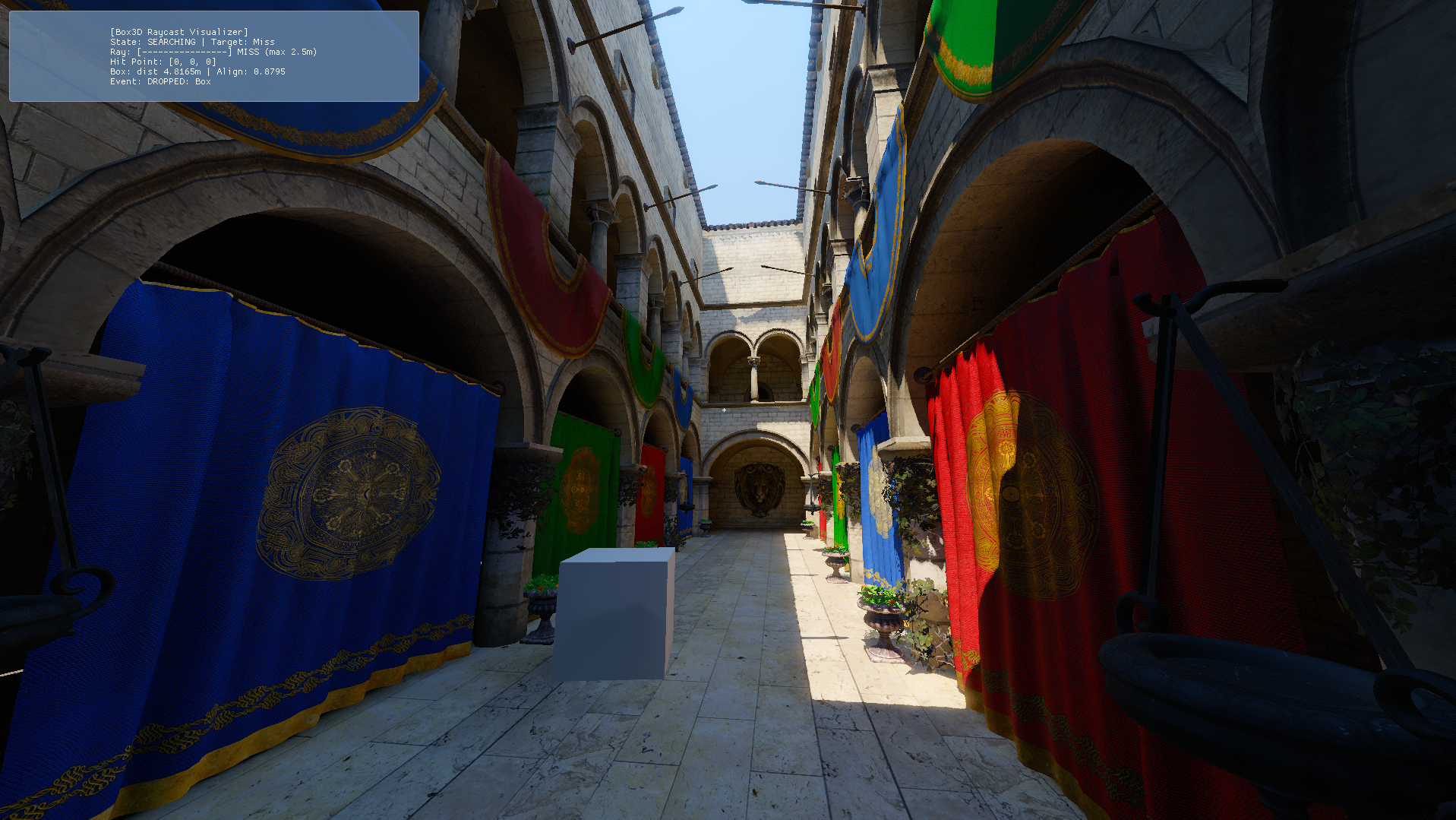
The runtime includes a debug overlay and frame-time capture. Reports record settings and camera position so the same scene can be checked again.
KasKade Studio Viewport
+
1. Direct3D 12 Viewport Real-time scene rendering with RTXGI DDGI, CSM cascaded shadows, and transform gizmos (W/E/R).
+
2. Scene hierarchy A tree of .kscene game entities with drag-and-drop grouping and tag search.
+
3. Property inspector Edit Transform coordinates, meshes, PBR materials, Rigidbody physics, and script fields.
+
4. Console & Profiler Core logs, C#/.zito exception traces, and frame thread timing graphs (CPU/GPU time).
KasKade Studio editor.

C# and .NET 10

The engine runs C# components through an embedded .NET 10 runtime. Scripts are compiled with Roslyn.

Components
Behaviour and MonoBehaviour classes provide lifecycle methods and access to scene objects. Serializable fields are supported.
Editing and debugging
The editor generates an IDE project and opens compiler errors at the relevant line. Assembly reload can transfer supported component state. A debugger can attach to the game process.

Physics, navigation and audio

These systems are available to game components and scripts.

Box3D physics
Dynamic and kinematic bodies, collisions and triggers are supported.
Character movement
The player controller supports jumping, crouching, ladders and moving surfaces. Navmesh building and pathfinding are available for character navigation.
Audio
Steam Audio integration provides spatial audio and accounts for obstacles between a source and the listener.

Platform and requirements

Requirements depend on the rendering mode and project content.

Running a game
The main platform is Windows 10/11. Path Tracing requires a DXR-capable GPU. DLSS RR requires NVIDIA RTX; the current FSR RR integration targets AMD RDNA 4 and Windows 11.
Building from source
The toolchain uses Rust 1.85 or newer, Visual Studio 2022 and the Windows SDK. C# components use .NET 10.